
New Zealand’s pet food industry is one of the fastest-growing food manufacturing sectors in the country, driven by domestic demand and a rapidly expanding export market into Asia, Australia and North America. Whether you’re producing dry kibble, wet pouches, meat-based treats or freeze-dried products, the right pet food processing equipment determines your output quality, production speed and compliance with both NZ and export market standards.
This guide covers the core categories of pet food processing equipment, what to look for in each, and how to choose between new and used machinery for your production line.
Pet Food manufacturing spans several distinct production stages, each requiring purpose-built machinery:
Injection, tumbling and portioning equipment for meat-based wet food and treats.
Blending raw ingredients into consistent kibble or paste formats
Applying fat coatings, palatants or flavour dustings to dry kibble
Filling and sealing pouches, bags and cans for retail and bulk formats.
Most NZ pet food manufacturers don’t need every category — your equipment list depends on whether you’re producing dry kibble, wet food, treats, or a mix of formats.
Pet food with a meat or protein base — common in premium and grain-free NZ pet food brands — relies on the same injection and tumbling technology used in human meat processing, adapted for pet food throughput and ingredient blends.
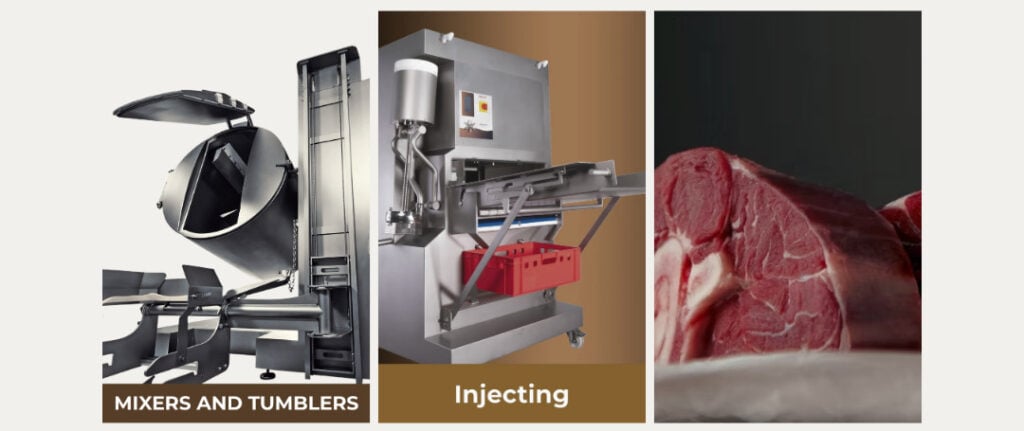
Ruhle injectors and tumblers are used across NZ meat and pet food processing for precise brine and marinade injection, as well as tumbling for texture and ingredient distribution. For pet food manufacturers using meat by-products or whole protein cuts, this equipment ensures consistent ingredient ratios across every batch — critical for meeting both palatability standards and nutritional labelling accuracy.
Key considerations when selecting injection and tumbling equipment for pet food:
Many premium pet treats and dry kibble products use a fat or flavour coating step to improve palatability. This stage typically requires both coating equipment and oil filtration systems to keep frying or coating oil clean and extend its usable life.
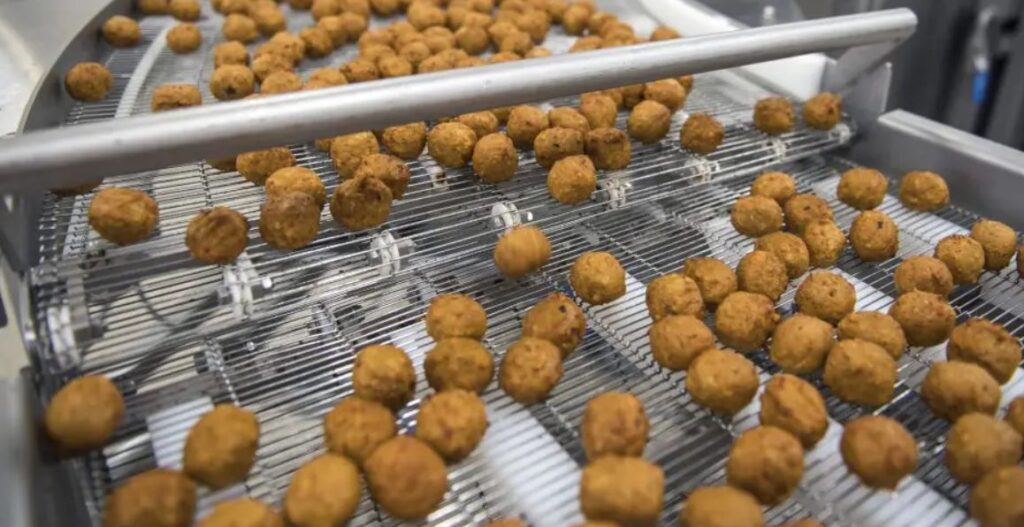
Hitec Foodsystems supplies coating equipment for flour, dip, breader and crumb applications, alongside ClearOil filtration systems that remove sediment and particles from frying oil. For pet treat manufacturers running continuous frying lines, oil filtration directly affects product consistency, oil costs and shelf life of the finished treat — a detail often overlooked until oil degradation starts affecting batch quality.
Once your pet food is processed, it needs to be packaged into the correct retail or bulk format — pouches, bags, cans or tubs — depending on whether you’re producing wet, dry or treat-format products. For dry kibble and treats packaged in bags or pouches, VFFS (vertical form fill seal) machines handle the forming, filling and sealing in a single automated process. This is the same packaging technology used across snack foods and powders, adapted for pet food bag formats and weights.
If your pet food line includes bulk packaging — large format dry food bags for retail or wholesale — bagging machines designed for free-flowing products handle accurate weighing and sealing at scale.
For NZ pet food manufacturers — particularly smaller and mid-sized producers — the new versus used decision matters more here than in many other food categories, because the pet food sector includes everything from small-batch artisan producers to large-scale export manufacturers.
New equipment makes sense when:
Used equipment makes sense when:
Proquip Solutions supplies both new machinery through manufacturer partners like Ruhle and Hitec, and quality used processing equipment for NZ pet food manufacturers at every production stage.
At minimum, you’ll need mixing equipment, a forming or extrusion process for kibble (or portioning equipment for meat-based products), and packaging machinery. Coating and oil filtration equipment is required if you’re producing flavour-coated treats or fried products.
Used equipment from reputable suppliers can run reliably for years, particularly for mixing, injection and packaging machinery that sees less wear than high-heat processing equipment. Always confirm service history and spare parts availability before purchasing.
Some equipment categories — injectors, tumblers, coating systems — are used across both sectors with appropriate cleaning protocols between runs. Dedicated pet food lines are recommended for facilities producing both product types at scale, to avoid cross-contamination risk and simplify compliance documentation.
Yes. Proquip Solutions supplies new and used processing and packaging equipment suited to pet food manufacturing, including meat processing equipment from Ruhle, coating and oil filtration systems from Hitec, and packaging machinery for kibble, treats and wet food formats.
Every pet food production line is different, shaped by your product format, batch size and compliance requirements. Proquip Solutions works with NZ pet food manufacturers to specify the right combination of new and used machinery for meat processing, coating, oil filtration and packaging.
Contact our team to discuss your production requirements, or call +64 (0) 9 263 0578.
Phone: +64 (0) 9 263 0578 Email: sales@proquipx.com Website: proquipx.com